09
Jan
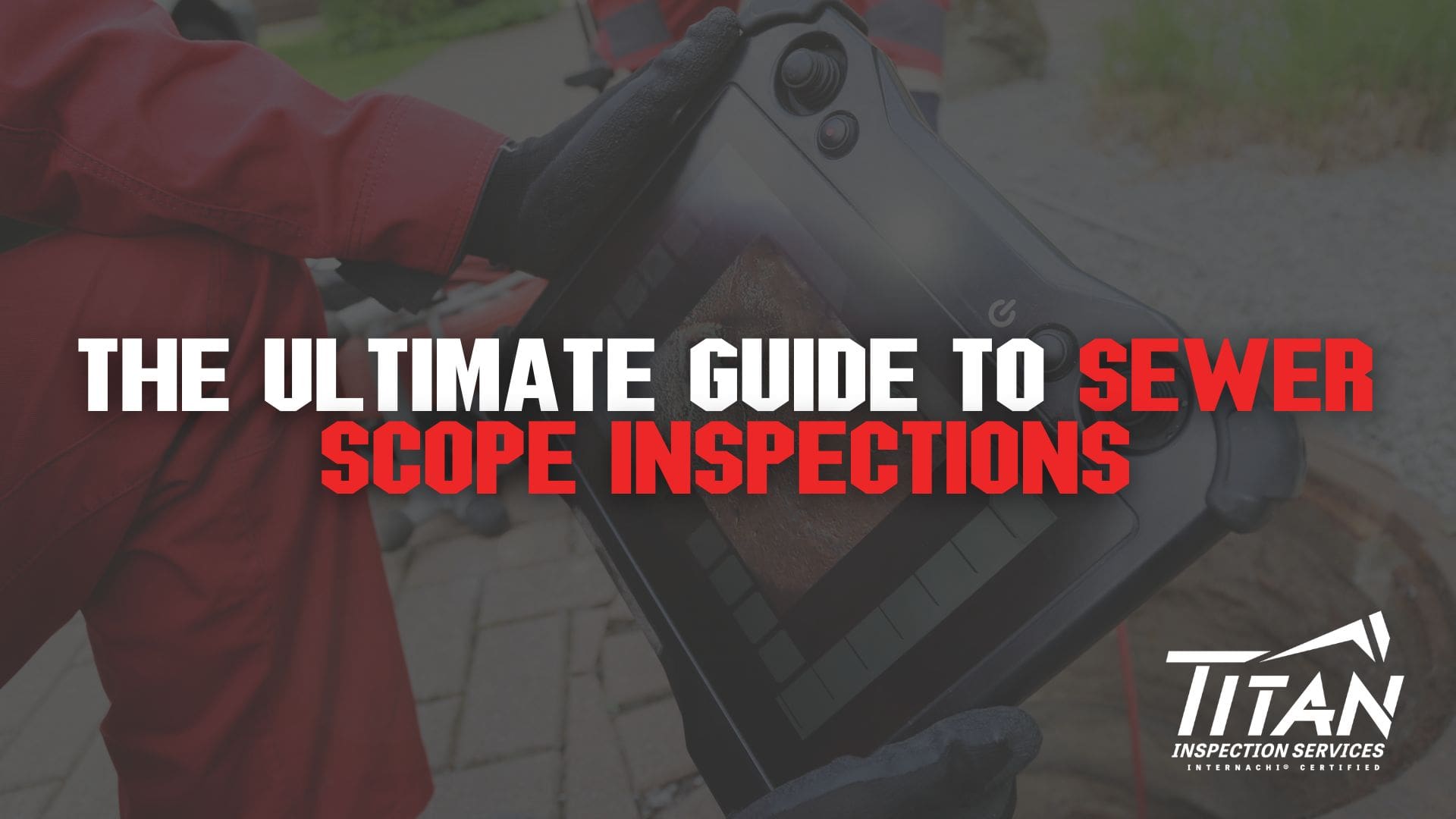
Based on our 40,000+ inspections across Northwest Washington, Titan Inspection Services has seen sewer scope inspections catch problems that a standard home inspection cannot reach. A sewer scope inspection is a camera inspection of your home’s underground sewer line. It is one of the clearest ways to know the real condition of pipe you cannot otherwise see. This guide explains what a sewer scope inspection covers and why buyers, sellers, and owners request one. It also covers when to schedule it, what our inspectors look for, and what your report will show.
What Is a Sewer Scope Inspection?
A sewer scope inspection uses a small video camera attached to a flexible cable. Our inspectors feed the camera into the sewer line through a cleanout. When no cleanout is available, they use a toilet opening instead. The camera sends live video to a monitor, so inspectors can see inside the pipe in real time.
Titan performs every sewer scope in-house, using Titan’s own trained inspectors. We never send this work to an outside plumber or a third-party partner. The scope can run as its own visit or alongside a full home inspection. You can see current options on our sewer scope inspection service page.
The video shows what a standard home inspection can’t. A general inspection checks the visible condition of plumbing like sinks, tubs, faucets, and shut-off valves. You can see everything a standard inspection covers on our What We Inspect page. It doesn’t look inside the pipe itself. A sewer scope goes past the walls and floors to show the actual condition of the line running from the house to the street connection.
Why Buyers, Sellers, and Owners Get a Sewer Scope Inspection
For home buyers, a sewer scope inspection provides information a standard inspection can’t. A defect documented on video gives you and the seller something concrete to work with before closing. That might be a repair, a credit toward the repair cost, or an updated price.
For home sellers, a sewer scope done ahead of listing can prevent a defect from surfacing during the buyer’s inspection period. Knowing your line’s condition ahead of time lets you address issues on your terms instead of under a closing deadline.
For homeowners who aren’t buying or selling, a sewer scope is a useful maintenance check. Tree roots, aging pipe, and ground movement can all affect a sewer line over time. These problems can build underground, unseen, before they cause a backup. A scope lets you see the line’s condition before that happens.
If your home is in Seattle, Seattle Public Utilities uses the term side sewer for this line. A side sewer carries wastewater from a building’s sinks, toilets, and drains to the public sewer in the street. Seattle Public Utilities explains that when you own a home or building, you own the side sewer to the public sewer main. Its side sewer maintenance guide says to hire a plumber or sewer inspector who can run a video camera through your side sewer to find problems. It also says to have the side sewer inspected before you purchase a property.
At Titan, we often say, “Every house has a story.” When you can identify the clues in that story through experience, you can help owners and buyers make better investment decisions. Sewer scopes often show that story first.
Key Takeaway: A sewer scope inspection gives buyers, sellers, and owners the same thing: a clear look at pipe condition that a standard inspection can’t show. You get that look in time to act before it becomes a costly emergency.
When to Schedule a Sewer Scope Inspection
Titan recommends a sewer scope inspection on almost every home we inspect, including new construction. New pipe can still develop problems from construction debris, an incorrect slope, damage from heavy equipment, or damage when the line is backfilled.
Beyond a purchase or sale, watch for signs that your current line may need a look:
• Slow drains or gurgling toilets
• Sewer odor inside or outside the home
• Bright green patches in the lawn above the suspected line
• Recurring blockages
• A home over 40 years old
• Mature trees nearby
• Any past repair to the sewer line
If you notice signs like these, it’s worth having the line checked before a small issue becomes a bigger one.
What Happens During a Sewer Scope Inspection
Your inspector locates the nearest cleanout, or pulls a toilet if no cleanout exists, and feeds the camera into the line. As the camera travels toward the street connection, the inspector watches the video feed. The inspector notes the pipe material, the condition of each joint, and anything that blocks or narrows the line.
Most sewer scope inspections take less than 30 minutes. You don’t need to be home for it. As with any of our inspections, you’re welcome to tag along and ask questions.
Once the scope is complete, our inspectors document what they found with recorded video, timestamps, and photos of anything significant. You will receive your written report, along with the video, within 24 hours.
Common Sewer Line Problems Our Inspectors Find
Based on our inspections across Northwest Washington, a handful of problems show up more than any other.
Root intrusion happens when tree roots find a small crack or loose joint in the pipe and grow inside it. Left alone, root intrusion can trap waste and cause a backup. Minor root intrusion can sometimes be cleared with root-cutting tools or hydro jetting. Severe root intrusion, especially in clay pipe, often means replacement is the only durable fix.
Cracked or collapsed pipe shows up most often in older pipe material like clay or cast iron. Still, ground movement or heavy equipment can crack any pipe. A cracked line can allow waste to leak into the surrounding soil.
Bellies and offset joints are spots where the pipe has sagged, or the sections have shifted out of alignment. Both create a low point where waste and debris collect instead of draining through, and both can lead to repeated clogs in the same spot.
Grease and debris buildup happens over time as cooking grease, wipes, and other material stick to the inside of the pipe. That buildup narrows the space waste can pass through.
New construction isn’t automatically free of problems. Construction debris left in the line, an incorrect slope, or pipe damaged during backfill can all affect a brand-new sewer line. That’s one reason we recommend a scope even on new builds.
Key Takeaway: Root intrusion, cracked or collapsed pipe, bellies, offset joints, and grease buildup account for most of what our inspectors find. They show up in homes of every age, including new construction.
What Your Sewer Scope Report Shows
Your sewer scope report includes the full video of the inspection along with our written notes. For each issue our inspectors find, the report notes roughly how far the defect sits from the house and what the inspector observed. It also includes a photo when something significant shows up on camera.
Your report gives you a documented, video-based record of the line’s condition. That way, you, your contractor, your agent, and the seller are all working from the same information instead of a guess.
Titan Inspection Services is InterNACHI Certified and is licensed and insured in Washington.
What a Sewer Scope Inspection Costs
Sewer scope pricing depends on whether you book it as a standalone service or bundle it with a full home inspection. Current pricing for both options is posted on our services and pricing page.
If you are buying or selling in the Seattle area specifically, our Seattle buyer’s guide to sewer scope inspections goes deeper on the pipe materials common to Seattle’s older housing stock. It also covers what repairs in that market typically involve.
Key Takeaway: A sewer scope inspection is a small line item compared to the repair it can help you avoid. Check current pricing on our services and pricing page before you book.
Frequently Asked Questions
What is a sewer scope inspection?
A sewer scope inspection uses a small video camera on a flexible cable to look inside your home’s sewer line. The camera travels from an access point near the house toward the street connection. It lets our inspectors see cracks, blockages, root intrusion, and other problems that aren’t visible from above ground. It is a separate service from a standard home inspection, which checks visible plumbing fixtures but doesn’t look inside the pipe.
Do I need a sewer scope inspection if I’m buying a home?
Most buyers benefit from a sewer scope inspection, especially on a home with mature trees nearby or a line that has never been checked. Titan recommends one on nearly every home we inspect, including new construction. A defect documented on video gives you and the seller something concrete to work through before closing. That might be a repair, a credit toward the repair cost, or a change to the price.
Does a new construction home need a sewer scope inspection?
Yes. New pipe can still develop problems from construction debris left in the line, an incorrect slope, damage from heavy equipment, or damage when the line is backfilled. Titan recommends a sewer scope inspection on new construction for the same reason we recommend it on older homes. It’s the clearest way to see the pipe’s actual condition instead of assuming it was installed correctly.
What problems can a sewer scope inspection find?
The problems our inspectors most often find are root intrusion, cracked or collapsed pipe, and grease or debris buildup. They also find bellies or offset joints, where the line sags or shifts out of alignment. Any of these can narrow the pipe or create a spot where waste collects instead of draining. Left alone, any of them can eventually lead to a backup.
How long does a sewer scope inspection take?
Most sewer scope inspections take less than 30 minutes, and you don’t need to be home. As with any of our inspections, you’re welcome to tag along and ask questions. Once the scope is finished, your written report and the full video are delivered within 24 hours.
Is a sewer scope part of a standard home inspection?
No. A sewer scope inspection is a separate, add-on service. A standard home inspection checks the visible condition of plumbing like sinks, tubs, faucets, and shut-off valves. It doesn’t include a camera inspection inside the pipe. You can book a sewer scope as its own visit or add it to a full home inspection.
What are the warning signs that I need a sewer scope inspection?
Watch for slow drains, gurgling toilets, sewer odor, or bright green patches in the lawn above the suspected line. Recurring blockages are another sign. A home over 40 years old is a sign, and so are mature trees nearby. Any past repair to the sewer line is also worth a follow-up scope. If you notice signs like these, it’s worth having the line checked.
How much does a sewer scope inspection cost?
Pricing depends on whether you book a sewer scope as a standalone service or bundle it with a full home inspection. Current pricing for both options is posted on our services and pricing page. We recommend checking there before you schedule, since pricing can be updated.
Schedule Your Inspection
A sewer scope inspection is one of the most useful, least invasive ways to know what is happening inside your home’s sewer line. It helps before you buy or sell, or when you simply want peace of mind about the pipe you can’t see. Titan Inspection Services performs every sewer scope in-house, backed by more than 40,000 inspections across Northwest Washington and a 4.9-star rating.
Ready to schedule a sewer scope inspection, or add one to an upcoming home inspection? Call us and we’ll get you on the schedule.
Phone: 206.451.1120