14
Apr
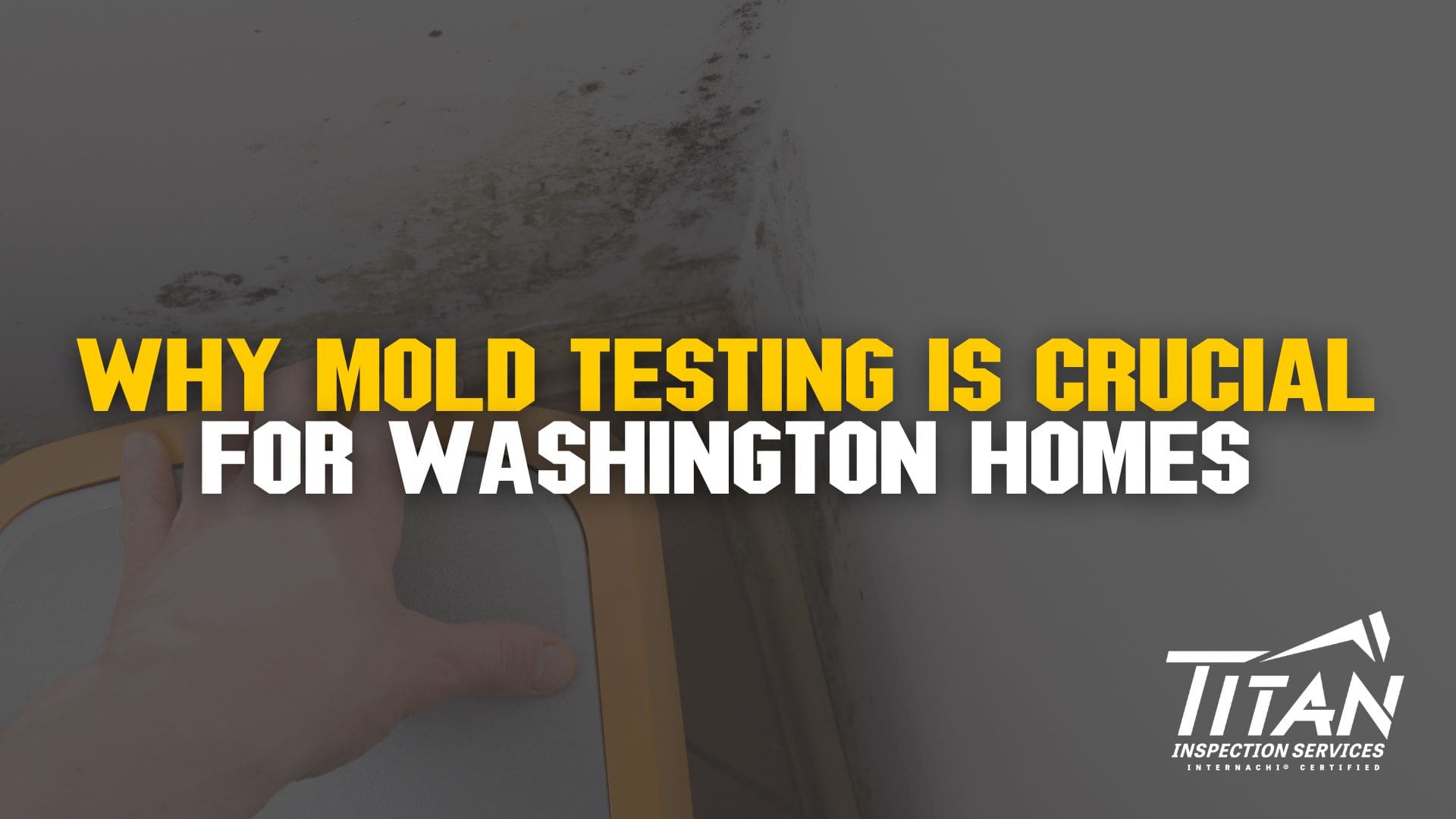
Based on our 40,000+ inspections across Northwest Washington, here’s how to decide whether mold testing is worth it for your home.
Mold testing sounds like something every homeowner in Seattle and across Western Washington should do. But it isn’t worth the cost every time. The answer depends on what you’re seeing, smelling, or trying to confirm before a sale.
Mold testing is a lab-based service that checks the air or a surface in your home for mold spores. Samples go to an accredited lab to identify the type and extent of mold growth. Titan Inspection Services is an InterNACHI-certified home inspection company serving Seattle, Tacoma, and communities across Northwest Washington. It offers mold testing as an add-on to a home inspection. Titan has completed more than 40,000 inspections and holds a 4.9-star rating. Our inspectors test for mold and report the lab’s findings.
What Mold Testing Involves
Mold testing gives you a lab-confirmed answer, not a guess. When you add it to a home inspection, our mold testing service covers a visual check of areas prone to moisture. Those include basements, attics, bathrooms, and HVAC systems. It also covers air sampling and, when mold is visible, surface sampling. Every sample goes to an accredited lab. The lab identifies the type and extent of mold growth.
Your results come in a detailed report. It outlines whether mold is present, the areas affected, and recommended steps for remediation. Titan’s home inspection and mold add-on reports give you the clear insight you need to make informed decisions. If the lab results call for remediation, that report is your starting point.
Key Takeaway: Mold testing adds lab-confirmed results to a home inspection. The report outlines whether mold is present, the areas affected, and recommended steps for remediation.
Why Western Washington’s Climate Puts Mold on the Radar
Mold isn’t unique to Washington. The Washington State Department of Health explains that mold spores need moisture to begin growing. Mold can grow on almost any surface, such as wood, carpet, sheet rock, and insulation. The Environmental Protection Agency puts it simply — the best way to control mold growth is to control moisture.
For a Western Washington home, the useful question is where moisture collects. The Washington State Department of Health notes mold grows best when there is lots of moisture from a leaky roof, high humidity, or flood. Not every home in the region has a mold problem, but the moisture-prone spots are worth a closer look. Think basements, attics, bathrooms, and HVAC systems. Keeping those spots dry is the moisture control the EPA points to.
Key Takeaway: Mold needs moisture to grow, so the moisture-prone spots in a Western Washington home deserve a closer look.
Signs Mold Testing Is Worth Considering
Not every home needs mold testing. But certain situations make it worth the add-on cost. Consider testing if:
• You smell a musty, damp odor and can’t trace it to an obvious source.
• Your home had a water event — a leak, a burst pipe, or flooding — and you want confirmation the area is clear.
• Someone in your household has ongoing allergy or respiratory symptoms.
• You’re buying a home that has a documented history of water intrusion.
• You’re selling and want lab-confirmed results on hand before a buyer’s inspector raises the question.
The health angle is part of why these situations matter. The Washington State Department of Health notes that sensitive individuals may have symptoms around mold. Symptoms may include skin rash, running nose, eye irritation, and cough. They may also include nasal congestion, aggravation of asthma, or difficulty breathing. It also notes that people with a suppressed immune system or lung disease may be at increased risk of infection. A small number of molds produce toxins called mycotoxins. High levels of exposure may cause toxic effects, including fatigue, nausea, headaches, and irritation to the lungs and eyes. These are possible effects, not guaranteed ones. But they’re a reasonable reason to want a lab-confirmed answer instead of a guess.
Key Takeaway: Mold testing earns its cost in specific situations. These include a musty smell with no clear source, a past water event, ongoing allergy symptoms, or a real estate transaction.
When You Might Not Need It Yet
Mold testing isn’t automatic just because Washington is damp. The Washington State Department of Health says you don’t need to sample for mold because in most cases you can see or smell it. Say you can see the mold, know its source, and plan to have it professionally cleaned. In that case, a lab test may not change what happens next.
Testing earns its place when mold might be hidden. It could be behind a wall, under floors, or in an attic or basement you can’t easily see. It also earns its place when a real estate transaction calls for a documented, lab-backed answer. You can also read Home Mold Inspections Without Being Alarmist and It Might Be Ugly, But Is It Mold?
What Mold Testing Costs With Titan and How to Add It
Mold, air, or asbestos testing is listed at $350 as an add-on to a Titan home inspection. You’ll find it on Titan’s current services and pricing page. The quote form on that page also offers mold, air, or asbestos testing on its own. It uses the same visual check, sampling, and lab analysis described on the mold testing page.
If any of the signs above sound familiar, ask about the mold testing add-on when you schedule. Do the same if you want a lab-confirmed answer before you buy, sell, or settle into a home.
Key Takeaway: Mold, air, or asbestos testing is listed at $350 as an add-on to a Titan home inspection. Titan’s quote form also offers it on its own.
Frequently Asked Questions
What is mold testing?
Mold testing is a lab-based service that checks the air or a surface in your home for mold spores. Titan’s mold testing add-on includes a visual inspection of moisture-prone areas and air sampling. It also includes surface sampling when mold is visible. Every sample goes to an accredited lab. The lab identifies the type and extent of mold growth. That gives you a documented answer about what’s in your home.
Is mold testing worth it before buying a home in Washington?
It depends on the home. Testing is worth considering if the home has a documented history of water intrusion. It’s also worth considering if you notice a musty smell you can’t trace. If the home looks and smells clear with no history of moisture problems, a lab test may not change your decision. The Washington State Department of Health notes that in most cases, you can see or smell mold without needing a sample. Testing is most useful when mold might be hidden.
What happens if mold testing finds a problem?
Titan Inspection Services tests for mold and reports what the lab finds. The report outlines whether mold is present, the areas affected, and recommended steps for remediation. You can use it to decide what to do next.
What does mold testing cost with Titan Inspection Services?
Mold, air, or asbestos testing is listed as a $350 add-on on Titan’s current services and pricing page. The quote form on that page also offers it on its own.
Can I skip mold testing if I don’t see or smell mold?
In most cases, yes. The Washington State Department of Health states that you don’t need to sample for mold because in most cases you can see or smell it. Testing adds the most value when mold could be hidden behind a wall, under floors, or in an attic or basement. It also helps when a real estate transaction calls for a documented, lab-backed answer.
What are common signs that mold testing might be worth it?
Here are common reasons to consider adding mold testing to an inspection. One is a musty odor with no obvious source. Another is a past leak or flood you want confirmed clear. Ongoing allergy or respiratory symptoms belong on the list. So do buying a home with a documented history of water intrusion and selling a home where you want lab-confirmed results on hand.
How is mold testing different from a standard home inspection?
A standard home inspection evaluates the visible condition of a home’s systems and components. Mold testing is a separate add-on. It uses air sampling, surface sampling, and lab analysis to detect mold spores specifically, including in cases where nothing is visible yet. You can see what a standard inspection covers on Titan’s what-we-inspect page and add mold testing separately.
The Bottom Line
Mold testing isn’t something every Washington home needs. But it earns its place in specific situations. Those include a musty smell you can’t trace, a past water event, or ongoing allergy symptoms. A real estate deal where you want lab-confirmed results is another.
Titan Inspection Services offers mold, air, and asbestos testing as an add-on to a home inspection. Your inspector tests and reports, and the report includes recommended steps for remediation. You get a straight answer about what’s in your home before you decide what to do about it.
Schedule Your Inspection
Titan has completed more than 40,000 inspections and holds a 4.9-star rating. If mold is a question in a home you’re buying, selling, or living in, the mold testing add-on answers it with lab results.
Call 206.451.1120 or reach us through our contact page and we’ll get you on the schedule.