21
Sep
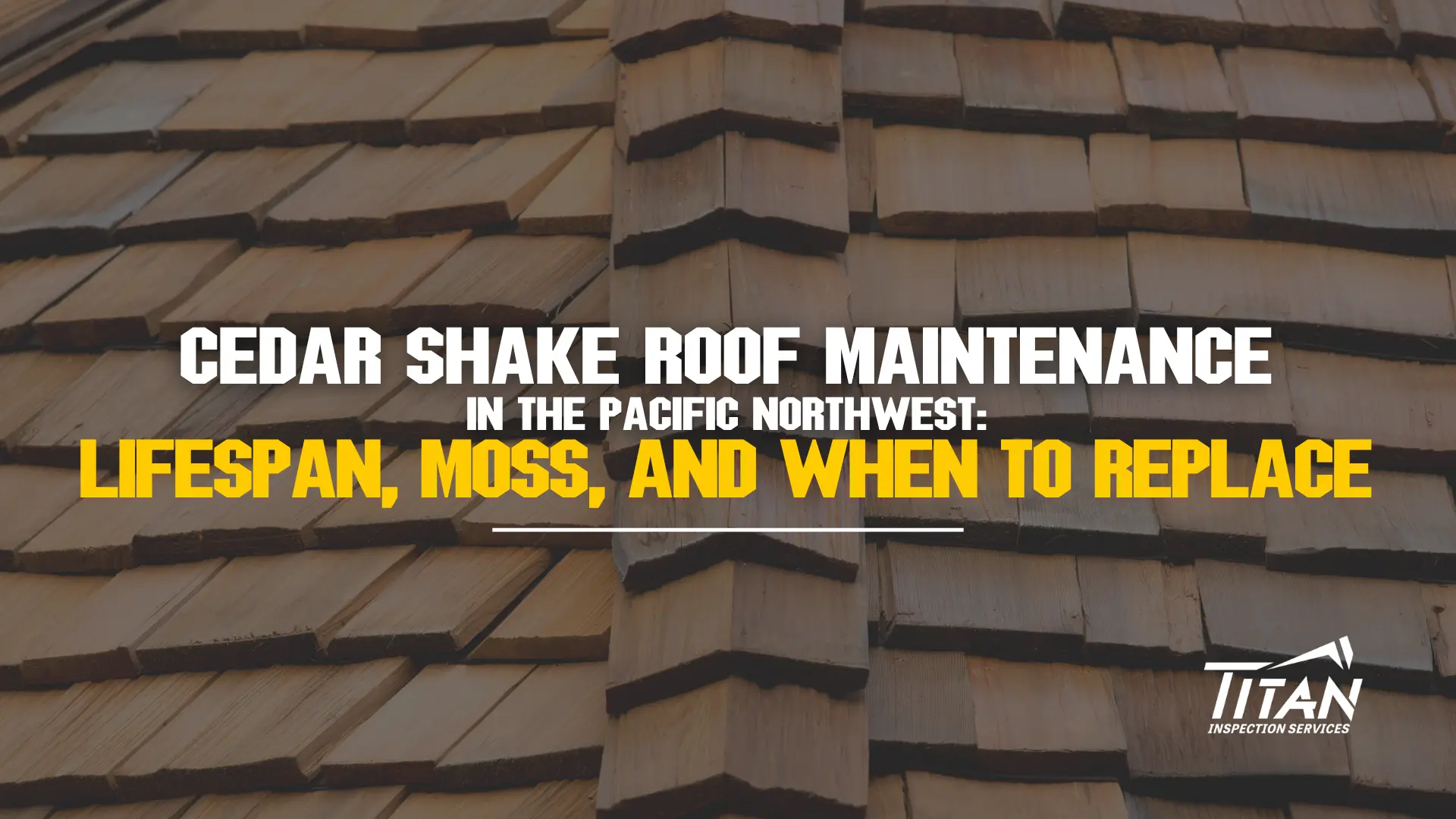
Cedar shake suits Pacific Northwest homes, and our wet climate is also hard on it.
Based on our 40,000+ inspections across Northwest Washington, cedar roofs cause more disagreement between buyers and sellers than most other components. Buyers often see a roof covered in green and assume it is finished, while sellers who have lived under it for years without a leak see no problem at all. The real condition is usually somewhere in between.
Here is how to read a cedar roof.
How Long Cedar Lasts Here
A cedar shake roof in Western Washington generally lasts 20 to 30 years. A cedar shingle roof, which is thinner and sawn rather than split, runs closer to 15 to 25 years.
That range is wide because our climate does not treat every roof the same way. Three things move a roof toward the low end of the range.
Shade is the biggest factor. A north-facing slope under Douglas fir stays damp for most of the year. The same roof on the south side of the same house can outlive it by a decade.
Ventilation is next. Cedar needs to dry from underneath as well as on top. A roof over a poorly vented attic can trap moisture against the wood and cause rot from the back side, which is not visible from the ground.
Then there is installation. Shakes need spacing between them to swell and shrink, and they need proper felt interlayment. A roof installed too tight or without that layer can cup and split early, no matter how well it is maintained.
Key Takeaway: Cedar shake in Western Washington generally lasts 20 to 30 years, and cedar shingle 15 to 25. Shade, attic ventilation, and installation quality matter more than age alone, which is why two roofs of the same age on the same street can be in very different condition.
What Moss Does to Cedar
Moss is one of the most misunderstood parts of a cedar roof.
Moss itself does not eat the wood. It holds water. A mat of moss on a shake keeps that shake damp long after the rain stops, and constant moisture is what breaks the wood down over time. Moss also grows into the gaps between shakes and can lift them, which opens a path for water to get underneath.
So moss matters. It’s just not an emergency, and it’s not the same thing as a failed roof.
The wrong response can cause more damage than the moss does. Pressure washing a cedar roof strips the soft surface wood, drives water under the shakes, and can shorten the roof’s life considerably. We see the results of this regularly, and the damage generally cannot be undone.
The accepted approach is gentle. Brush loose moss off dry, working downward so you don’t lift shakes against their grain. If you are not comfortable working on a roof, this is a job for a professional. Moss treatments work slowly, and the common zinc and copper products come with a trade-off worth knowing about. Then deal with the cause: trim back branches that shade the roof, and keep the gutters clear so water drains rather than sitting.
One local note. Moss treatments run off into storm drains and from there into Puget Sound. When Washington’s Department of Ecology studied a representative Puget Sound neighborhood, moss control turned out to be the single largest source of the zinc in that runoff, and the agency suggests baking soda as a friendlier alternative. Read the label before you buy, and follow its directions on application and timing.
Key Takeaway: Moss damages cedar by trapping moisture against the wood, not by eating it. Brush it off dry, and check the label before using a zinc or copper treatment, since Ecology found moss control to be the largest single source of zinc reaching Puget Sound. Never pressure wash a cedar roof. It strips the surface wood and can shorten the roof’s life considerably.
Reading the Roof: Repair or Replace
Individual problems get repaired. Widespread patterns get replaced. Here is how we sort one from the other.
These signs usually point to repair. A handful of cracked or missing shakes in one area. A flashing detail that has failed at a chimney or a vent. Moss concentrated on one shaded slope while the rest of the roof looks sound. Damage traceable to a specific event, like a branch coming down.
These signs usually point to replacement. Curling and cupping across whole slopes, which means the wood has lost its ability to hold shape. Shakes that feel soft or crumble at the edges when handled. Widespread thinning where shakes have worn down to well under their original thickness. Daylight visible through the roof deck from inside the attic. Multiple active leaks in different areas.
The attic usually settles the question. From the ground you see the surface. From inside, you see whether water has been getting through, and for how long. We look for staining on the sheathing, rusted nail points, and darkened or compressed insulation. A roof that looks rough but shows a dry, clean deck underneath has more life left than it appears.
What This Costs
Cedar is a premium roof, and the pricing reflects that. Ranges we see quoted in the Seattle area look roughly like this.
Professional moss removal and treatment runs $500 to around $1,500, depending on roof size, access, and time since the last treatment.
Spot repairs, replacing damaged shakes and correcting flashing, typically run $500 to $2,500.
Full cedar shake replacement generally runs $18,000 to $35,000 for an average home, and steep or complex roofs run higher.
Switching to composition roofing at the time of replacement can cost considerably less, and many homeowners here make that choice. The trade-off is between appearance and budget, and there’s no wrong answer. Note: If you live in an HOA community, there may be requirements for a higher grade of composition roofing.
The National Roofing Contractors Association is a neutral starting point if you want to read about materials before getting quotes.
Key Takeaway: Moss treatment runs $500 to around $1,500; spot repairs run $500 to $2,500; and full cedar replacement runs $18,000 to $35,000 for an average home. Because the gap between maintenance and replacement is so large, keeping moss under control pays off.
What Our Inspectors Look At
The roof is one of the standard systems we evaluate on every inspection. On cedar specifically, here is what we are doing.
We assess the visible surface for cupping, curling, splitting, thinning, and moss coverage, and we note which slopes are worst rather than giving one overall grade. We check flashing at chimneys, vents, valleys, and wall intersections, because that is where most leaks start regardless of roof material. We look at the gutters and where they discharge. We go into the attic and look at the underside of the deck for staining, rot, and daylight. And we check attic ventilation, since poor ventilation is a common and easily missed cause of early failure.
We photograph what we find, so you can see the condition of your own roof rather than take our word for it. Every inspection includes over 250 photos for exactly this reason.
If you are selling a home with a cedar roof, this is a component worth getting ahead of. A pre-listing inspection shows the roof’s real condition before a buyer’s inspector turns it into a negotiation.
Frequently Asked Questions
How long does a cedar shake roof last in Western Washington?
Generally 20 to 30 years for shake and 15 to 25 for shingle. Shaded, poorly ventilated roofs land at the low end and can fail sooner. Roofs with good sun exposure, clear ventilation, and regular moss control can reach the high end and sometimes beyond it.
Can I pressure wash moss off my cedar roof?
No. Pressure washing strips the wood’s soft outer layer and forces water underneath the shakes, which can shorten the roof’s life considerably. Brush loose moss off while the roof is dry. If you use a zinc or copper-based treatment, follow the label, and know that Ecology found moss control to be the largest single source of zinc reaching Puget Sound.
Does moss mean my roof needs to be replaced?
Not on its own. Moss holds moisture against the wood, which shortens the roof’s life if it is left for years, but a mossy roof over sound shakes is a maintenance job rather than a replacement. What matters is the condition of the wood underneath and whether water has been reaching the deck.
Is a cedar roof worth replacing with cedar again?
That depends on budget and on what you want the house to look like. Cedar costs substantially more than composition shingle and needs ongoing moss control. Many Seattle homeowners replace cedar with composition and are happy with it, while others consider the appearance worth the premium. Both are defensible.
Can you tell the roof’s condition without walking on it?
Often, yes. We assess roofs from the surface where it is safe to do so, and from ladders, the ground, and the attic where it is not. Walking a deteriorated cedar roof damages it, so we deliberately avoid walking on some roofs. The attic inspection tells us a great deal that the surface cannot.
Does a home inspection include the roof?
Yes. The roof is a standard part of every home inspection, along with the attic, foundation, plumbing, electrical, and heating. Our what we inspect page lists the full scope.
Schedule Your Inspection
Titan Inspection Services has completed more than 40,000 inspections across Northwest Washington and holds a 4.9-star rating. If you want a straight read on whether a cedar roof has five years left or fifteen, that is exactly the kind of question a thorough inspection answers.
Call 206.451.1120 or visit titaninspectionservices.com and we’ll get you on the schedule. Your full report lands within 24 hours.